A very interesting survey has been released by the TUC (Trade Union Congress) which says that over half of adults in the UK (51%) are concerned about the impact of artificial intelligence on their jobs.
In addition, the concern is particularly acute for workers aged between 25 and 34, with nearly two-thirds (62%) of those surveyed reporting such worries. This comes as major employers such as Amazon and Microsoft announce that advances in AI could lead to significant job losses.
In business today the talk of AI is everywhere. Conferences and events have wall-to-wall companies selling the latest ground-breaking technology for customer service and any number of applications. The current uptake of AI is far from what these companies would have you believe and their current successful implementation and effectiveness is far from evident.
However, there is undoubtedly a huge opportunity for AI to make a difference. For organisations it will make customer service far more efficient by dealing with the functional and process driven issues and complaints. For simple queries a chatbot, properly set up, can provide a fast and efficient service.
So we are told that as these AI bots improve and learn they will be able to do more and more. You might even ask yourself – what use will human workers be anymore?
Here lies the opportunity…
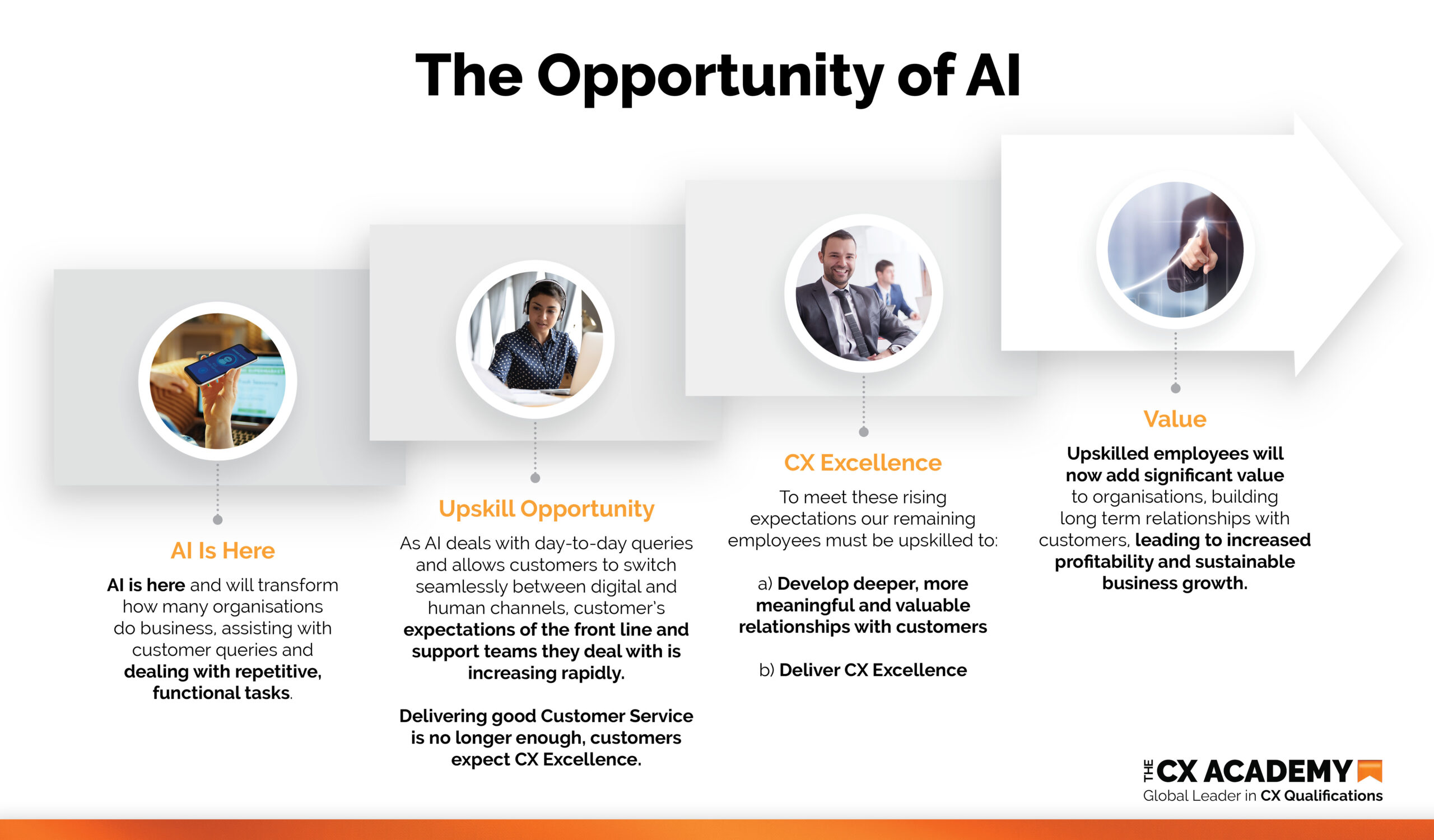
For AI to succeed it is critical that it provides a win-win-win outcome for each of the key audiences. Firstly, it must benefit the customer in terms of ease of doing business with you. Secondly, it must allow staff to create deeper relationship building and doing work they never dreamt possible and thirdly it must benefit business owners and shareholder ROI.
The obvious answer is staring us in the face. We must upskill our workers to far higher standards and make their contribution to profitability far greater. Sure, let AI deal with all that drudge work but train our workers to be smarter, more empathetic and effective.
We are all human and when the chips are down we all want another human to talk to. Properly skilled, our employees can build trust with customers, manage their expectations, treat them as people and simply put – make their lives easier.

Training that focuses on building customer focused employees that go the extra mile and are empowered will differentiate companies from those who purely rely on AI.
In business terms, the combination of smart AI and highly trained customer-facing staff will mean less customer churn, lower costs, improved customer acquisition and above all a happier workforce.
In the survey, the TUC recognises the benefits AI can bring but “wants assurances that workers will receive a ‘digital dividend’ of the productivity gains achieved through AI, by requiring companies to invest in workforce skills and training, by improving pay and conditions for employees.”
Workers are worried and anxious. This is not good for morale, motivation or to be very blunt – profit.
So why not invest in our workforce? Doing nothing is not an option and we will sleepwalk into much greater problems.
Give employees higher, more effective skills and in this way they will not only be more responsive to change but they will also add significant value to our organisations.

This blog references research reported by The Guardian. Read more here.